
AI Brand Mention Alerts: How to Set Up Real-Time Citation Monitoring Across ChatGPT, Gemini, and Perplexity
Learn how to set up AI brand mention alerts that notify you when ChatGPT, Gemini, and Perplexity cite or drop your brand in AI-generated answers.
Every day, ChatGPT, Gemini, Claude, and Perplexity are recommending brands in your category to buyers — and unless you have AI brand mention alerts in place, you won't know whether yours is one of them until a competitor has already built a lead.
This guide walks you through the complete setup: how to define the queries AI engines are answering in your category, how to configure alerts that notify you the moment your citation status changes, and how to turn that signal into action faster than your competitors. By the end, you'll have a working alert framework — the AI Brand Alert Stack — running across ChatGPT, Gemini, Claude, and Perplexity without manually prompting each engine every day.
If you're newer to how AI engines decide which brands to cite in the first place, our guide on AI citation tracking across ChatGPT, Claude, Gemini, and Perplexity covers the mechanics before you build alerts on top of that foundation.
What Are AI Brand Mention Alerts?
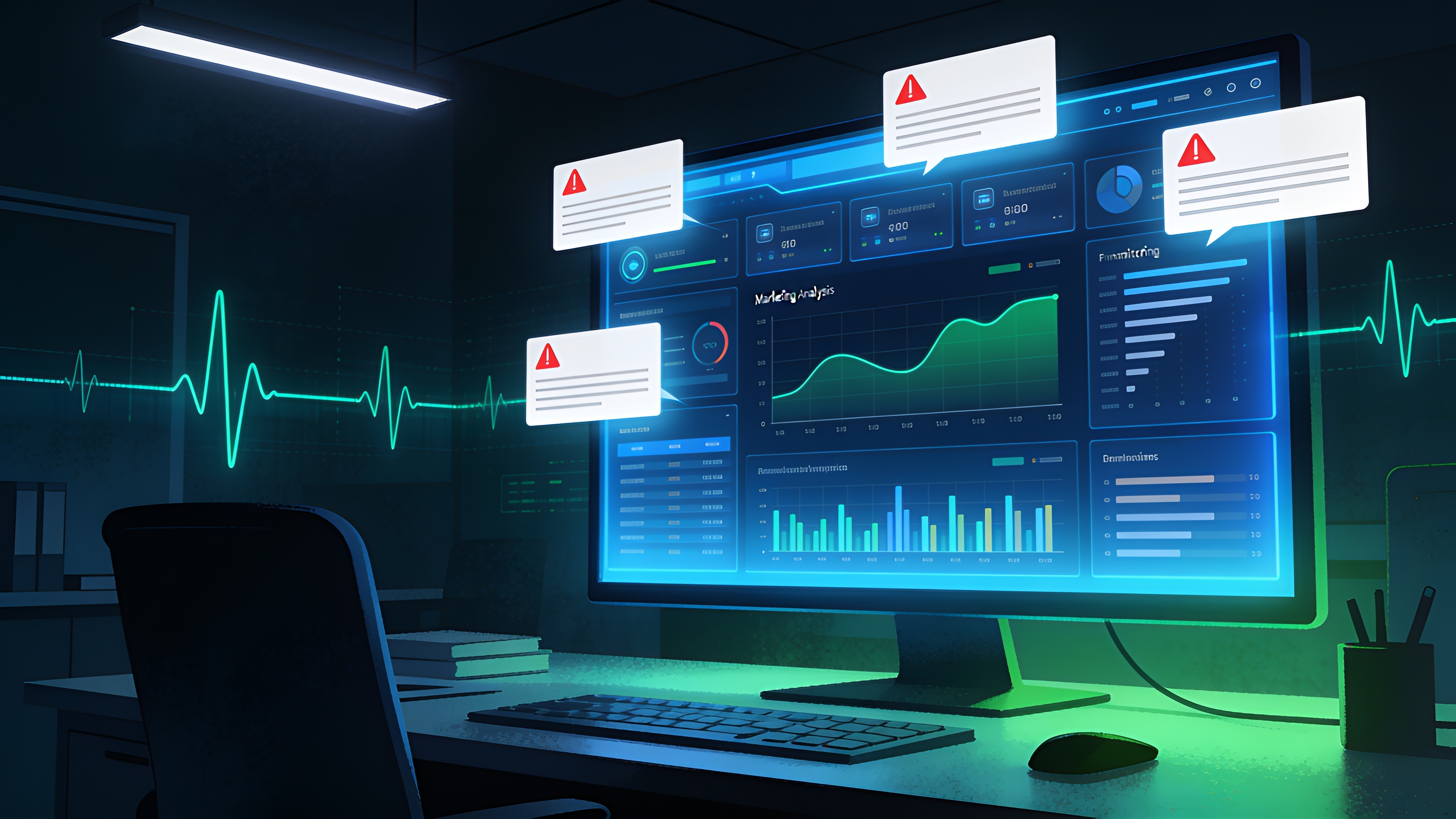
AI brand mention alerts are automated notifications that fire when a generative AI engine — ChatGPT, Gemini, Claude, or Perplexity — cites, excludes, or shifts how it recommends your brand in response to a buyer query. Unlike Google Alerts, which track newly indexed web pages, AI brand mention alerts monitor dynamically generated answers — a fundamentally different data layer that traditional tools cannot reach.
The distinction matters because a brand can have a perfectly optimized website and still be completely invisible in AI-generated answers. What AI engines recommend is determined by training data, retrieved source documents, and the specific phrasing of the user's query — none of which Google Alerts, Mention.com, or social listening platforms are designed to monitor.
Setting up AI brand mention alerts transforms this invisible, dynamic system into a measurable signal your marketing team can act on — the same way rank-change notifications work in traditional SEO platforms, but targeting the answer layer where an increasing share of buyer research now happens.
Why Traditional Web Monitoring Tools Miss Your AI Brand Citations
Traditional monitoring tools fail at AI citation tracking because they monitor the wrong layer of the internet. Google Alerts, social listening platforms, and web mention trackers work by crawling or indexing published content — articles, social posts, review pages, forum threads. They can tell you when someone writes about your brand; they cannot tell you what an AI engine is currently recommending when a buyer asks which product to choose.
AI-generated answers are not published anywhere. They are assembled on demand, in real time, from a combination of pre-trained model knowledge and dynamically retrieved source documents. The response to "best project management software for agencies" on ChatGPT today may differ from the same query next week — and neither version produces a URL you can monitor with a crawler-based tool.
This creates a structural blind spot with real commercial consequences. To effectively monitor brand mentions across AI engines, you need a tool that actively submits queriesto those engines, captures the generated answers, parses which brands appear and in what context, and compares results over time to surface meaningful shifts.
Critically, none of the major AI platforms have filled this gap themselves. ChatGPT, Google Gemini, Anthropic's Claude, and Perplexity do not offer built-in brand mention alert features or business dashboards that notify you when your brand appears or disappears from their answers. That gap is structural — these are consumer products, not brand monitoring platforms — and it means third-party tooling is the only viable path to systematic citation alerts.
The compounding problem is that AI citation status is not static. It changes as models update, as the source pages AI engines cite are edited or removed, and as new competitors publish content that earns AI citations. A brand that was cited consistently in Q1 can drop from answers entirely in Q2 without a single change to its own website. Without an alert system watching for these shifts, you find out only when you notice the pipeline softening — weeks or months later.
How to Set Up Real-Time AI Brand Mention Alerts: Step-by-Step
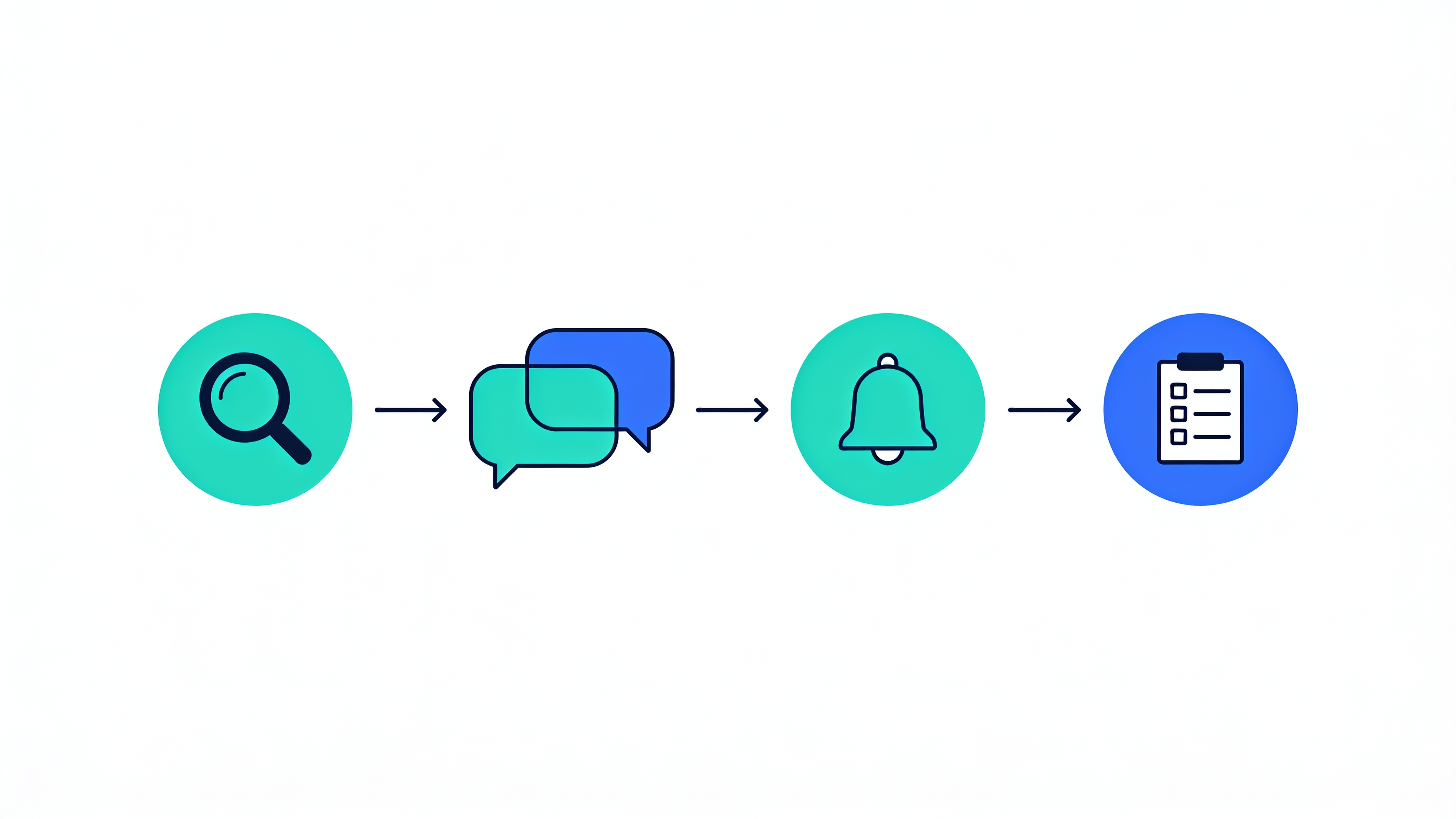
The following workflow — the AI Brand Alert Stack — covers everything from initial query definition to team alert routing. Plan for roughly 90 minutes to configure it the first time; after that, it runs automatically.
- Define your tracked query set. List 10–30 queries that reflect how buyers in your category ask AI engines for recommendations. Phrase them conversationally — as a buyer would, not as a keyword planner would. Examples: "What's the best email marketing platform for e-commerce brands?" or "Which SEO tools do enterprise teams actually use?" Prioritize mid-funnel queries (category comparisons, best-of lists, use-case-specific questions) and head-to-head competitive queries that name your rivals. These are the prompts AI engines are already answering for your buyers today.
- Select the AI engines to cover. Configure monitoring across at minimum ChatGPT (GPT-4o), Google Gemini, Anthropic's Claude, and Perplexity. Each engine has distinct citation patterns, source preferences, and update cadences — your brand can be cited consistently on Perplexity and absent from Gemini for the exact same query. Cross-engine coverage is what produces an accurate market picture rather than a misleading partial one. See the full breakdown of the best AI citation monitoring tools in 2026 for platform-by-platform capability comparisons.
-
Configure alert thresholds and trigger types. Set your alert logic around three core signal types:
- Inclusion alerts — fire when your brand is cited in a response where it previously wasn't
- Exclusion alerts — fire when your brand disappears from a response where it previously appeared
- Sentiment shift alerts — fire when your brand is cited but with qualifications or negative framing
- Set your monitoring cadence. A weekly full-scan baseline works for most teams — it captures meaningful citation shifts without overwhelming the team with data. Layer daily or near-real-time scanning on top for your highest-priority queries: those tied to active campaigns, product launches, or competitive battlegrounds where citation changes would require an immediate content or PR response.
- Route alerts to the right owners. Alerts are only valuable if they reach the person who can act on them. Configure weekly digest emails for summary review and direct Slack notifications for threshold-breach events. Map each alert type to a clear owner: exclusion alerts → content team, sentiment shift alerts → PR or reputation team, competitor citation gain alerts → growth or competitive intelligence team. A clear routing matrix prevents alert fatigue and ensures nothing sits ignored in a shared inbox.
Running this stack manually — prompting each AI engine individually, logging responses in a spreadsheet, comparing week-over-week by hand — is feasible for five queries but breaks down quickly at scale. Mentionary is built to automate this entire workflow across all four major AI engines from a single configured dashboard. It submits your tracked query set on your defined cadence, records which brands appear in each answer and in what context, identifies which source URLs the AI cited, and delivers threshold-triggered alerts directly to your email or Slack. Instead of spending hours on manual sampling, your team receives a clean, actionable notification when something worth responding to has changed.
Reading Your AI Citation Source Tracking Data
AI citation analysis translates raw mention data into a prioritized list of actions. Each signal type your alerts surface tells you something specific about your brand's position in the AI answer layer — and each demands a different response. The table below maps the five core citation signals to their meaning and the recommended action for each.
| Citation Signal | What It Means | Recommended Action |
|---|---|---|
| Brand cited positively | AI recommends your brand for this query without qualification | Identify the source URL the AI cited; reinforce and protect that asset |
| Brand absent from answer | Your brand is invisible for this query category | Audit which competitors are cited instead; create content targeting that gap |
| Brand cited with caveats | AI qualifies its recommendation (e.g., "some users report…") | Find the negative source driving the caveat; address it (review response, updated docs) |
| Competitor cited in your place | A rival captured the citation your brand should have won | Analyze the competitor's cited content and authority signals; build a stronger alternative |
| Specific source URL cited | AI is pulling from a specific page (blog, Reddit thread, Trustpilot review) | Verify the page is live, accurate, and representative; flag for ongoing monitoring |
Source URL tracking is particularly high-leverage for content prioritization. When an AI engine cites a specific Reddit thread or G2 review to justify its recommendation of a competitor, that URL is a direct intervention point. You know exactly which piece of content is shaping your brand's standing in AI answers — and you can prioritize improving or building alternatives to that asset above all other content work.
The "brand cited with caveats" signal is often overlooked but critically important. An AI engine saying "Brand X is a strong option, though some users report a steep learning curve" is doing real damage to conversion rates on AI-assisted buying journeys. That qualification almost always traces back to a specific source — a forum complaint, a review, a competitor comparison page — and citation source tracking surfaces it directly rather than leaving you to guess.
Setting Competitor Brand Mention Alerts to Benchmark Your AI Share of Voice
Competitor AI brand monitoring uses the exact same alert infrastructure as your own brand tracking, pointed at rival citation patterns to reveal your relative position in the AI answer layer. This is how you move from tracking raw brand mentions to understanding what actually matters competitively: your share of AI-generated recommendations within your category.
AI share of voice, in this context, is the percentage of relevant buyer queries where your brand is cited versus the percentage where a competitor is cited instead. A brand with 40% citation share on the query cluster "best [category] tools for [use case]" is winning nearly half of those AI-mediated conversations. A brand with 8% citation share is largely invisible to AI-assisted buyers in that cluster — regardless of how well its website ranks in traditional search.
To extend your AI Brand Alert Stack to competitor monitoring:
- Add your top 3–5 competitors as tracked entities alongside your own brand within your existing query set — no new queries needed
- Configure competitor citation gain alerts specifically for queries where your brand is currently absent, so you know when rivals are widening the gap
- Track competitor source URLs to identify which content assets — blog posts, review profiles, guest articles — are driving their AI visibility
- Run a monthly share-of-voice calculation across your full query set to identify which clusters are trending toward or away from your brand over time
Competitor citation spikes are high-signal events worth investigating immediately. When a rival suddenly starts appearing in AI answers they weren't visible in before, something changed: new content published, an authority signal earned, a source page updated. The sooner you identify what drove the change, the faster you can respond with a targeted content or outreach effort of your own.
For platform-specific competitive intelligence — including how citation patterns on ChatGPT differ structurally from those on Gemini and Perplexity — the ChatGPT brand monitoring guide covers how to read and respond to competitive citation signals on that platform in particular.
The combination of your own brand alerts and competitor alerts gives your team a complete operational picture: not just whether you're visible in AI answers, but how visible you are relative to every alternative your buyers are being shown at the exact moment they're forming a purchase decision.
- None of the major AI engines — ChatGPT, Gemini, Claude, or Perplexity — offer native brand mention alert features, making dedicated third-party monitoring tools essential for any systematic workflow.
- AI-generated answers are dynamic and query-dependent, meaning your brand's citation status can shift without any corresponding change to your website.
- Effective AI brand alert stacks begin with a focused query set of 10–30 high-intent buyer phrases, phrased conversationally as buyers would ask an AI assistant.
- Citation source tracking identifies the specific URLs — Reddit threads, review sites, blog posts — that AI engines pull from, giving you a direct content action target.
- Competitor citation monitoring within the same query set reveals your true AI share of voice and surfaces the content gaps you need to close.
- A weekly monitoring cadence combined with threshold-triggered real-time alerts gives teams actionable signal without alert fatigue.