

How to Get Your Brand Cited in Perplexity AI: A Step-by-Step Optimization Guide
Learn how to get cited in Perplexity AI with a proven step-by-step strategy covering authority signals, content formats, and citation tracking in 2026.
Perplexity AI has reshaped how buyers conduct research. Instead of scanning a page of ranked links, they ask a specific question, receive a synthesized answer, and follow the cited sources that Perplexity trusted. If your brand is not among those sources, you are invisible at the highest-intent moment of the buyer journey. Learning how to get cited in Perplexity AI is no longer optional for brands competing in AI-heavy search environments — it is the new frontier of demand capture.
What Does It Mean to Be Cited by Perplexity AI?
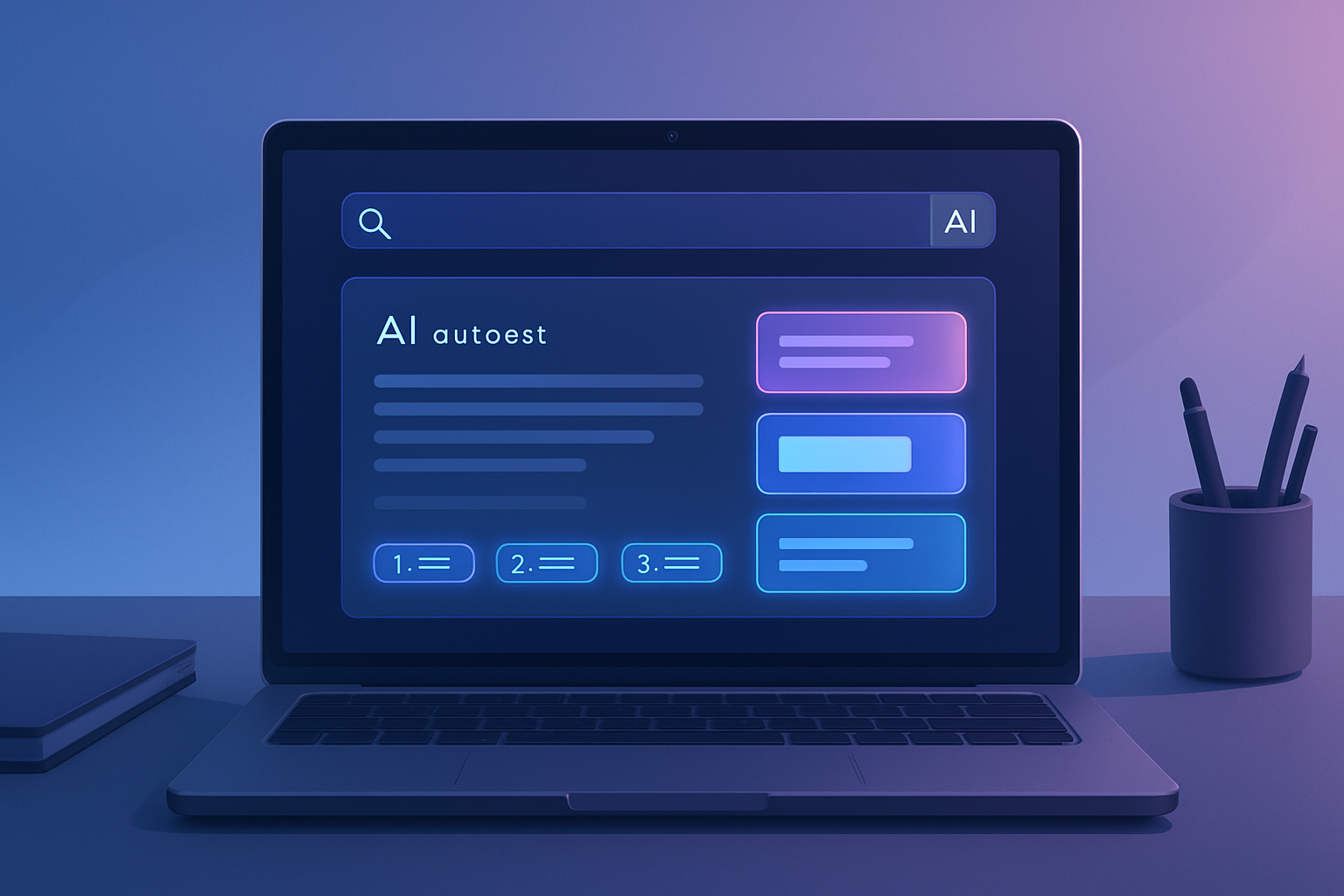
A Perplexity AI citation is a numbered source reference embedded inside an AI-synthesized answer. Perplexity reads multiple web sources in real time, combines their content into a single response, and cites each contributing source with a visible card. Being cited means Perplexity has judged your content authoritative, relevant, and fresh enough to support its answer to a buyer's question.
Those source cards — showing your domain name, page title, and a brief excerpt — are brand visibility at its highest-intent moment. The buyer is actively researching; your citation is not a passive impression but a trust signal from an AI system the buyer is relying on. That is why Perplexity AI brand mentions have become a priority metric for forward-thinking marketing teams in 2026.
Citations are also structurally different from organic rankings. Perplexity does not return a list of URLs for users to evaluate — it synthesizes a complete answer and credits its sources inline. Your goal is not to rank in position one of a results page; it is to be selected as a contributing source at all. The strategies that earn citations are related to, but meaningfully different from, traditional SEO tactics.
How Perplexity Chooses Which Brands and Sources to Cite
Perplexity's source-selection mechanism combines real-time web retrieval with a layered set of authority and relevance signals. Understanding these signals is the foundation of any effective Perplexity citation optimization strategy — without it, content improvements are untargeted guesswork.
- Recency. Perplexity crawls the web continuously and strongly favors recently published or updated content. A comprehensive how-to guide published this quarter will typically outperform a superior but two-year-old article on the same topic. Publishing cadence matters as much as publishing depth.
- Domain authority. Perplexity evaluates the overall authority of your domain — informed by quality inbound links, brand mentions across the web, and the technical health of your site. High-authority domains earn a credibility baseline that makes their individual pages eligible for a broader range of query types from the start.
- Structured, question-answering content. Perplexity's retrieval system is built to find content that directly and clearly answers questions. Pages organized with explicit headers, numbered steps, comparison tables, and FAQ sections give Perplexity clean, extractable answers — making them far more likely to be cited than pages built around dense narrative prose or keyword repetition.
- Third-party corroboration. Perplexity does not cite only your own website. It also pulls from Reddit discussions, Trustpilot reviews, G2 listings, industry publications, and community forums that mention your brand. The more credible external sources discuss your brand in relevant contexts, the more citation surface area you create.
For a comprehensive look at how AI engines approach brand mentions across all major platforms, the Answer Engine Optimization guide maps the full signal landscape across ChatGPT, Gemini, and Perplexity in one place. If you are also tracking how often existing citations are already appearing, the Perplexity brand mention monitoring guide covers the measurement side in depth.

The Content Formats Perplexity Prefers to Cite
Not all content earns Perplexity AI brand citations equally. Perplexity's retrieval logic consistently favors structured, intent-matched formats over generic editorial content. The table below maps content type to typical citation likelihood — use it to prioritize your production calendar and identify which existing pages need upgrading.
| Content Type | Citation Likelihood in Perplexity AI |
|---|---|
| How-to guides and step-by-step tutorials | High — directly answers procedural queries; structured format extracts cleanly into AI answers |
| Comparison pages (Product A vs. Product B) | High — maps to high-intent research queries; explicit structure aids extraction |
| Review aggregator listings (G2, Trustpilot, Capterra) | High — Perplexity treats third-party review platforms as neutral, authoritative sources |
| Reddit threads with substantive, upvoted answers | High — community validation signals high relevance; Perplexity cites Reddit extensively for experiential queries |
| Glossary and definition pages with schema markup | Medium–High — ideal for definitional queries; schema improves machine readability and extraction accuracy |
| FAQ pages with FAQ schema | Medium–High — directly maps to question-format queries; schema signals boost citation eligibility |
| Original research reports and data posts | Medium — cited when your data is the authoritative source; original research earns the most weight here |
| Generic product or category landing pages | Low–Medium — cited only for directly branded queries; low value for generic research questions |
| Press releases and announcement posts | Low — promotional framing reduces extraction value; rarely selected as a source for research queries |
How to Get Cited in Perplexity AI: A Step-by-Step Optimization Process
The following process turns how to get cited in Perplexity AI from an abstract goal into a repeatable methodology. Each step builds on the previous one — skipping ahead produces weaker results than working through the sequence in order.
-
Audit your current Perplexity citation footprint. Before optimizing, establish your baseline. Manually query Perplexity with the 10–15 most important research questions in your product category. Record which brands appear, how often your brand is cited, what content types Perplexity is pulling from, and which third-party sources (Reddit, G2, Trustpilot) appear alongside owned content. This audit surfaces your current gaps and your competitors' citation patterns at the same time.
-
Map the specific queries your buyers use during research. Perplexity citations are query-specific — a brand cited for one question may not appear for a closely related one. Build a query map of the 20–40 most important research questions in your category, grouped by topic cluster. This map becomes the blueprint for your content strategy and tells you precisely which gaps to fill first.
-
Create or update structured, question-answering content. For each high-priority query, ensure you have a page that answers it directly and completely. Use explicit H2 or H3 headings that mirror the question, numbered steps for procedural content, comparison tables for evaluative content, and FAQ sections for multi-part questions. Generic prose does not extract cleanly into AI answers; structured, scannable content does.
-
Implement structured data markup. Add HowTo, FAQ, and Article schema to your most citation-relevant pages. Schema markup does not guarantee a citation, but it signals machine-readability and makes your content easier for Perplexity's retrieval system to parse and excerpt accurately. Validate your markup with Google's Rich Results Test before publishing — malformed schema provides no benefit and can introduce crawl errors.
-
Seed your brand on third-party authority platforms. Perplexity cites Reddit threads, Trustpilot and G2 reviews, LinkedIn articles, and industry publication features alongside your own content. Actively build presence on these platforms: provide substantive answers in relevant Reddit discussions, request reviews from customers on G2 and Trustpilot, pursue editorial mentions in trade publications, and publish detailed LinkedIn articles on category topics. Each credible external mention expands your citation surface area and reinforces your brand's authority in Perplexity's source evaluation.
-
Strengthen domain authority through quality backlinks. Domain authority functions as a credibility prerequisite. Pursue high-quality inbound links from authoritative industry sites, partner publications, and original research that others naturally cite. A stronger domain authority baseline means new content earns citation eligibility faster — because Perplexity's source evaluation begins with domain credibility before assessing individual page quality.
-
Publish consistently to maintain recency signals. Perplexity weights freshness heavily, and a quarterly publication cadence is insufficient for competitive categories. Aim to publish or meaningfully update content weekly or biweekly, prioritizing the query clusters where competitors are currently being cited ahead of you. Recency is a compounding advantage: brands that publish consistently become the default fresh source Perplexity reaches for across an ever-expanding set of queries.
How to Track Whether Perplexity Is Actually Citing You
Optimization without measurement is guesswork. You can publish structured content, implement schema markup, and seed third-party mentions — and still have no reliable signal of whether Perplexity is actually citing you, at what frequency, or in what context. Without that data, there is no feedback loop: you cannot identify what is working, what needs adjustment, or where a competitor is quietly pulling ahead.
Manual tracking — querying Perplexity by hand across dozens of prompts on a regular cadence — is how most brands start, but it scales poorly. The number of relevant queries in any meaningful product category runs into the hundreds. Perplexity's answers shift continuously as the web changes, and a manual snapshot taken today may look completely different in two weeks. The effort required grows faster than the insight it produces.
This is precisely what AI citation tracking platforms are built to solve. Mentionary monitors your brand's citation frequency and context across Perplexity AI continuously — tracking which queries surface your brand, what content Perplexity is citing, how your citation rate trends over time, and how your visibility compares to competitors across the same query set.
Instead of guessing whether your optimization steps are producing results, you see exactly which content changes drove citation gains and where the highest-leverage gaps remain. The step-by-step process above produces changes; Mentionary measures those changes and surfaces the next best action. For marketing teams investing seriously in brand visibility in Perplexity AI, that tracking layer is what separates a one-time experiment from a scalable, repeatable acquisition channel.
- Perplexity AI selects cited sources based on recency, domain authority, structured content clarity, and third-party corroboration — not keyword matching alone.
- How-to guides, comparison pages, and review aggregator listings have the highest citation likelihood in Perplexity AI answers.
- Seeding your brand on platforms like Reddit, Trustpilot, and industry publications significantly expands your citation surface area beyond your own website.
- Structured data markup (FAQ, HowTo, Article schema) signals machine-readability and improves your content's eligibility to be cited by Perplexity.
- Tracking your actual citation frequency is essential — optimization without measurement leaves you unable to identify what is working.
- Consistent, fresh content publication compounds over time: brands that publish regularly become the default source Perplexity reaches for first.